Showing posts with label Future Technology. Show all posts

Saturday, February 12, 2011

Becoming Superman Is Possible With Microsoft Kinect

Want to be Superman? No problem!

Students from the University of Amsterdam are working on a hack/mod for Microsoft's Kinect that brings back the childhood dream of becoming the Man of Steel.


siccovansas

Sunday, February 06, 2011

Engineers Grow Nanolasers On Silicon, Pave Way For On-Chip Photonics

Berkeley – Engineers at the University of California, Berkeley, have found a way to grow nanolasers directly onto a silicon surface, an achievement that could lead to a new class of faster, more efficient microprocessors, as well as to powerful biochemical sensors that use optoelectronic chips.

They describe their work in a paper to be published Feb. 6 in an advanced online issue of the journal Nature Photonics.

"Our results impact a broad spectrum of scientific fields, including materials science, transistor technology, laser science, optoelectronics and optical physics," said the study's principal investigator, Connie Chang-Hasnain, UC Berkeley professor of electrical engineering and computer sciences.

The increasing performance demands of electronics have sent researchers in search of better ways to harness the inherent ability of light particles to carry far more data than electrical signals can. Optical interconnects are seen as a solution to overcoming the communications bottleneck within and between computer chips.

Because silicon, the material that forms the foundation of modern electronics, is extremely deficient at generating light, engineers have turned to another class of materials known as III-V (pronounced "three-five") semiconductors to create light-based components such as light-emitting diodes (LEDs) and lasers.

But the researchers pointed out that marrying III-V with silicon to create a single optoelectronic chip has been problematic. For one, the atomic structures of the two materials are mismatched.

"Growing III-V semiconductor films on silicon is like forcing two incongruent puzzle pieces together," said study lead author Roger Chen, a UC Berkeley graduate student in electrical engineering and computer sciences. "It can be done, but the material gets damaged in the process."

Moreover, the manufacturing industry is set up for the production of silicon-based materials, so for practical reasons, the goal has been to integrate the fabrication of III-V devices into the existing infrastructure, the researchers said.

"Today's massive silicon electronics infrastructure is extremely difficult to change for both economic and technological reasons, so compatibility with silicon fabrication is critical," said Chang-Hasnain. "One problem is that growth of III-V semiconductors has traditionally involved high temperatures – 700 degrees Celsius or more – that would destroy the electronics. Meanwhile, other integration approaches have not been scalable."

The UC Berkeley researchers overcame this limitation by finding a way to grow nanopillars made of indium gallium arsenide, a III-V material, onto a silicon surface at the relatively cool temperature of 400 degrees Celsius.

"Working at nanoscale levels has enabled us to grow high quality III-V materials at low temperatures such that silicon electronics can retain their functionality," said Chen.

The researchers used metal-organic chemical vapor deposition to grow the nanopillars on the silicon. "This technique is potentially mass manufacturable, since such a system is already used commercially to make thin film solar cells and light emitting diodes," said Chang-Hasnain.

Once the nanopillar was made, the researchers showed that it could generate near infrared laser light – a wavelength of about 950 nanometers – at room temperature. The hexagonal geometry dictated by the crystal structure of the nanopillars creates a new, efficient, light-trapping optical cavity. Light circulates up and down the structure in a helical fashion and amplifies via this optical feedback mechanism.

The unique approach of growing nanolasers directly onto silicon could lead to highly efficient silicon photonics, the researchers said. They noted that the miniscule dimensions of the nanopillars – smaller than one wavelength on each side, in some cases – make it possible to pack them into small spaces with the added benefit of consuming very little energy

"Ultimately, this technique may provide a powerful and new avenue for engineering on-chip nanophotonic devices such as lasers, photodetectors, modulators and solar cells," said Chen.

"This is the first bottom-up integration of III-V nanolasers onto silicon chips using a growth process compatible with the CMOS (complementary metal oxide semiconductor) technology now used to make integrated circuits," said Chang-Hasnain. "This research has the potential to catalyze an optoelectronics revolution in computing, communications, displays and optical signal processing. In the future, we expect to improve the characteristics of these lasers and ultimately control them electronically for a powerful marriage between photonic and electronic devices."

Source: Reprinted news release via University of California - Berkeley

Saturday, February 05, 2011

Researchers Work To Develop A Vehicle That Can Be Driven By The Blind

Last Saturday, a blind driver dodged cardboard boxes thrown in front of him while driving a modified Ford Hybrid Escape around the Daytona International Speedway. He had only seconds to react to the obstacles.

"If we just put boxes on the track, people might think we planned the route," said Dennis Hong, whose robotics and mechanisms lab at Virginia Tech modified the cars.

Instead, Hong's team threw boxes from a van so they bounced around. “That shows everyone that their position is random, and that the drivers are really driving,” said Hong.

In addition to avoiding boxes and taking the raceway's turns, the driver, Mark Riccobono, also passed the van.

Fortunately, Riccobono and a second blind driver, Anil Lewis, had done it before. Read more - Researchers work to develop a vehicle that can be driven by the blind

Bioengineered Veins Offer New Hope On Horizon For Patients Lacking Healthy Veins For Coronary Bypass Surgery Or Dialysis

The day when a surgeon can pull a new human vein “off the shelf” for use in life-saving vascular surgeries is now one step closer to reality. New research published in the current issue of the journal, Science Translational Medicine, demonstrates the efficacy of tissue-engineered vascular grafts (TEVGs) that are immediately-available at the time of surgery and have decreased potential for infection, obstruction or clotting. The bioengineering method of producing veins reported in the newly-published research shows promise in both large and small diameter applications, such as for Coronary Artery Bypass Graft (CABG) surgery and for vascular access in hemodialysis.
Coronary Artery Bypass Graft (CABG) Surgery

The American Heart Association Update on Heart Disease Statistics reports that in 2007, in the U.S., just over 400,000 coronary bypass procedures were performed. Patients requiring bypass surgery may not have suitable veins or arteries available and are not candidates for synthetic grafts because of the size needed for grafting.

“This new type of bioengineered vein allows them to be easily stored in hospitals so they are readily available to surgeons at the time of need,” said Alan P. Kypson, M.D., Associate Professor of Cardiothoracic Surgery, Brody School of Medicine, at East Carolina University, also an author of the paper. ”Currently, grafting using the patient’s own veins remains the gold standard. But, harvesting a vein from the patient’s leg can lead to complications, and for patients who don’t have suitable veins, the bioengineered veins could serve as an important new way to provide a coronary bypass.”

Kidney Hemodialysis

According to statistics published by the National Kidney Foundation, 320,000 patients are on chronic hemodialysis. Each year, 110,000 new patients develop renal failure requiring dialysis, and the number is growing by three percent per year. More than half of dialysis patients lack the healthy veins necessary and must undergo an arteriovenous graft (AV graft) placement in order to have bloodstream access for hemodialysis.

“Most AV grafts that are placed for hemodialysis access are comprised of a synthetic material, which suffers from significant drawbacks including a high rate of infection, or a propensity for occlusion due to thrombosis and intimal hyperplasia,” said Jeffrey H. Lawson, M.D., Ph.D., Associate Professor of Surgery at Duke University School of Medicine and an author of the research. “Due to high complication rates, each AV dialysis graft requires an average of 2.8 interventions over its lifetime just to keep it functioning. Hence, there is a huge clinical need for a functionally superior, off-the-shelf, AV graft that suffers from fewer complications than current materials.”

The research was conducted by scientists from Duke University, East Carolina University, Yale University, and Humacyte, and was funded by Humacyte, a leader in regenerative medicine. Overseeing the research and senior author of the article was Laura Niklason, M.D., Ph.D., founder of Humacyte, and Professor of Anesthesiology and of Biomedical Engineering at Yale University. Niklason is a recognized authority in regenerative medicine for arterial engineering and was leader of the team that recently created a functioning rat lung in a laboratory.

“Not only are bioengineered veins available at the time of patient need, but the ability to generate a significant number of grafts from a cell bank will allow for a reduction in the final production costs, as compared to other regenerative medicine strategies,” added lead author Shannon L. M. Dahl, Senior Director of Scientific Operations and Co-Founder of Humacyte, Inc. “While there is still considerable research to be done before a product is available for widespread use, we are highly encouraged by the results outlined in this paper and eager to move forward with additional study,” Dahl said.

About The Research

In this research, bioengineered veins were generated in a bioreactor, decellularized, and stored up to 12 months in refrigerated conditions. Then bioengineered veins (3-6mm in diameter) demonstrated excellent blood flow and resistance to occlusion in large animal models for up to one year.

Image: A 6 mm-diameter decellularized human bioengineered vein before implant. Credit: Science/AAAS
Source: Reprinted news release via Humacyte

New Nanomaterials Unlock New Electronic And Energy Technologies

A new way of splitting layered materials to give atom thin "nanosheets" has been discovered. This has led to a range of novel two-dimensional nanomaterials with chemical and electronic properties that have the potential to enable new electronic and energy storage technologies. The collaborative* international research led by the Centre for Research on Adaptive Nanostructures and Nanodevices (CRANN), Trinity College Dublin, Ireland, and the University of Oxford has been published in this week's Science.

The scientists have invented a versatile method for creating these atom thin nanosheets from a range of materials using common solvents and ultrasound, utilising devices similar to those used to clean jewellery. The new method is simple, fast, and inexpensive, and could be scaled up to work on an industrial scale.

"Of the many possible applications of these new nanosheets, perhaps the most important are as thermoelectric materials. These materials, when fabricated into devices, can generate electricity from waste heat. For example, in gas-fired power plants approximately 50% of energy produced is lost as waste heat while for coal and oil plants the figure is up to 70%. However, the development of efficient thermoelectric devices would allow some of this waste heat to be recycled cheaply and easily, something that has been beyond us, up until now," explained Professor Jonathan Coleman, Principal Investigator at CRANN and the School of Physics, Trinity College Dublin who led the research along with Dr Valeria Nicolosi in the Department of Materials at the University of Oxford.

This research can be compared to the work regarding the two-dimensional material graphene, which won the Nobel Prize in 2010. Graphene has generated significant interest because when separated into individual flakes, it has exceptional electronic and mechanical properties that are very different to those of its parent crystal, graphite. However, graphite is just one of hundreds of layered materials, some of which may enable powerful new technologies.

Coleman's work will open up over 150 similarly exotic layered materials – such as Boron Nitride, Molybdenum disulfide, and Bismuth telluride – that have the potential to be metallic, semiconducting or insulating, depending on their chemical composition and how their atoms are arranged. This new family of materials opens a whole range of new "super" materials.

For decades researchers have tried to create nanosheets from layered materials in order to unlock their unusual electronic and thermoelectric properties. However, previous methods were time consuming, laborious or of very low yield and so unsuited to most applications.

"Our new method offers low-costs, a very high yield and a very large throughput: within a couple of hours, and with just 1 mg of material, billions and billions of one-atom-thick nanosheets can be made at the same time from a wide variety of exotic layered materials," explained Dr Nicolosi, from the University of Oxford.

These new materials are also suited for use in next generation batteries – "supercapacitors" – which can deliver energy thousands of times faster than standard batteries, enabling new applications such as electric cars. Many of these new atomic layered materials are very strong and can be added to plastics to produce super-strong composites. These will be useful in a range of industries from simple structural plastics to aeronautics.

Source: Reprinted news release via Trinity College Dublin

Future Surgeons May Use Robotic Nurse, 'Gesture Recognition'

Surgeons of the future might use a system that recognizes hand gestures as commands to control a robotic scrub nurse or tell a computer to display medical images of the patient during an operation.

Both the hand-gesture recognition and robotic nurse innovations might help to reduce the length of surgeries and the potential for infection, said Juan Pablo Wachs, an assistant professor of industrial engineering at Purdue University.

The "vision-based hand gesture recognition" technology could have other applications, including the coordination of emergency response activities during disasters.

"It's a concept Tom Cruise demonstrated vividly in the film 'Minority Report,'" Wachs said.

Surgeons routinely need to review medical images and records during surgery, but stepping away from the operating table and touching a keyboard and mouse can delay the surgery and increase the risk of spreading infection-causing bacteria.

The new approach is a system that uses a camera and specialized algorithms to recognize hand gestures as commands to instruct a computer or robot.

At the same time, a robotic scrub nurse represents a potential new tool that might improve operating-room efficiency, Wachs said.

Findings from the research will be detailed in a paper appearing in the February issue of Communications of the ACM, the flagship publication of the Association for Computing Machinery. The paper, featured on the journal's cover, was written by researchers at Purdue, the Naval Postgraduate School in Monterey, Calif., and Ben-Gurion University of the Negev, Israel.

Research into hand-gesture recognition began several years ago in work led by the Washington Hospital Center and Ben-Gurion University, where Wachs was a research fellow and doctoral student, respectively.

He is now working to extend the system's capabilities in research with Purdue's School of Veterinary Medicine and the Department of Speech, Language, and Hearing Sciences.

"One challenge will be to develop the proper shapes of hand poses and the proper hand trajectory movements to reflect and express certain medical functions," Wachs said. "You want to use intuitive and natural gestures for the surgeon, to express medical image navigation activities, but you also need to consider cultural and physical differences between surgeons. They may have different preferences regarding what gestures they may want to use."

Other challenges include providing computers with the ability to understand the context in which gestures are made and to discriminate between intended gestures versus unintended gestures.

"Say the surgeon starts talking to another person in the operating room and makes conversational gestures," Wachs said. "You don't want the robot handing the surgeon a hemostat."

A scrub nurse assists the surgeon and hands the proper surgical instruments to the doctor when needed.

"While it will be very difficult using a robot to achieve the same level of performance as an experienced nurse who has been working with the same surgeon for years, often scrub nurses have had very limited experience with a particular surgeon, maximizing the chances for misunderstandings, delays and sometimes mistakes in the operating room," Wachs said. "In that case, a robotic scrub nurse could be better."

The Purdue researcher has developed a prototype robotic scrub nurse, in work with faculty in the university's School of Veterinary Medicine.

Researchers at other institutions developing robotic scrub nurses have focused on voice recognition. However, little work has been done in the area of gesture recognition, Wachs said.

"Another big difference between our focus and the others is that we are also working on prediction, to anticipate what images the surgeon will need to see next and what instruments will be needed," he said.

Wachs is developing advanced algorithms that isolate the hands and apply "anthropometry," or predicting the position of the hands based on knowledge of where the surgeon's head is. The tracking is achieved through a camera mounted over the screen used for visualization of images.

"Another contribution is that by tracking a surgical instrument inside the patient's body, we can predict the most likely area that the surgeon may want to inspect using the electronic image medical record, and therefore saving browsing time between the images," Wachs said. "This is done using a different sensor mounted over the surgical lights."

The hand-gesture recognition system uses a new type of camera developed by Microsoft, called Kinect, which senses three-dimensional space. The camera is found in new consumer electronics games that can track a person's hands without the use of a wand.

"You just step into the operating room, and automatically your body is mapped in 3-D," he said.

Accuracy and gesture-recognition speed depend on advanced software algorithms.

"Even if you have the best camera, you have to know how to program the camera, how to use the images," Wachs said. "Otherwise, the system will work very slowly."

The research paper defines a set of requirements, including recommendations that the system should:

* Use a small vocabulary of simple, easily recognizable gestures.
* Not require the user to wear special virtual reality gloves or certain types of clothing.
* Be as low-cost as possible.
* Be responsive and able to keep up with the speed of a surgeon's hand gestures.
* Let the user know whether it understands the hand gestures by providing feedback, perhaps just a simple "OK."
* Use gestures that are easy for surgeons to learn, remember and carry out with little physical exertion.
* Be highly accurate in recognizing hand gestures.
* Use intuitive gestures, such as two fingers held apart to mimic a pair of scissors.
* Be able to disregard unintended gestures by the surgeon, perhaps made in conversation with colleagues in the operating room.
* Be able to quickly configure itself to work properly in different operating rooms, under various lighting conditions and other criteria.

"Eventually we also want to integrate voice recognition, but the biggest challenges are in gesture recognition," Wachs said. "Much is already known about voice recognition."

Image: Robotic nurse. Credit: Purdue University photo/Mark Simons

Source: Reprinted news release via Purdue University

Proposed Mission to Jupiter System Achieves Milestone

Credit: NASA
With input from scientists around the world, American and European scientists working on the potential next new mission to the Jupiter system have articulated their joint vision for the Europa Jupiter System Mission. The mission is a proposed partnership between NASA and the European Space Agency. The scientists on the joint NASA-ESA definition team agreed that the overarching science theme for the Europa Jupiter System Mission will be "the emergence of habitable worlds around gas giants."

The proposed Europa Jupiter System Mission would provide orbiters around two of Jupiter's moons: a NASA orbiter around Europa called the Jupiter Europa Orbiter, and an ESA orbiter around Ganymede called the Jupiter Ganymede Orbiter.

"We've reached hands across the Atlantic to define a mission to Jupiter's water worlds," said Bob Pappalardo, the pre-project scientist for the proposed Jupiter Europa Orbiter, who is based at NASA's Jet Propulsion Laboratory in Pasadena, Calif. "The Europa Jupiter System Mission will create a leap in scientific knowledge about the moons of Jupiter and their potential to harbor life."

The new reports integrate goals that were being separately developed by NASA and ESA working groups into one unified strategy.

The ESA report is being presented to the European public and science community this week, and the NASA report was published online in December. The NASA report is available at http://www.lpi.usra.edu/opag .

The proposed mission singles out the icy moons Europa and Ganymede as special worlds that can lead to a broader understanding of the Jovian system and of the possibility of life in our solar system and beyond. They are natural laboratories for analyzing the nature, evolution and potential habitability of icy worlds, because they are believed to present two different kinds of sub-surface oceans.

The Jupiter Europa Orbiter would characterize the relatively thin ice shell above Europa's ocean, the extent of that ocean, the materials composing its internal layers, and the way surface features such as ridges and "freckles" formed. It will also identify candidate sites for potential future landers. Instruments that might be on board could include a laser altimeter, an ice-penetrating radar, spectrometers that can obtain data in visible, infrared and ultraviolet radiation, and cameras with narrow- and wide-angle capabilities. The actual instruments to fly would be selected through a NASA competitive call for proposals.

Ganymede is thought to have a thicker ice shell, with its interior ocean sandwiched between ice above and below. ESA's Jupiter Ganymede Orbiter would investigate this different kind of internal structure. The Jupiter Ganymede Orbiter would also study the intrinsic magnetic field that makes Ganymede unique among all the solar system's known moons. This orbiter, whose instruments would also be chosen through a competitive process, could include a laser altimeter, spectrometers and cameras, plus additional fields-and-particles instruments

The two orbiters would also study other large Jovian moons, Io and Callisto, with an eye towards exploring the Jupiter system as an archetype for other gas giant planets.

NASA and ESA officials gave the Europa Jupiter System Mission proposal priority status for continued study in 2009, agreeing that it was the most technically feasible of the outer solar system flagship missions under consideration.

Over the next few months, NASA officials will be analyzing the joint strategy and awaiting the outcome of the next Planetary Science Decadal Survey by the National Research Council of the U.S. National Academies. That survey will serve as a roadmap for new NASA planetary missions for the decade beginning 2013.

For more information about the Europa Jupiter System Mission, go to http://opfm.jpl.nasa.gov/europajupitersystemmissionejsm/ .

JPL is managed for NASA by the California Institute of Technology in Pasadena.

Source: NASA

Thursday, January 27, 2011

Want To Shoot Aliens With Your iPhone? There's An App For That!

Convert your iPhone into an alien shooting machine with the Appgun. The app will be release in April at a cost of about $30 and comes with a free alien shooting game.


Via Gizmodo

Friday, January 14, 2011

Taiwan Develops Face-Recognising Vending Machine

A face-recognising vending machine developed in Taiwan is able to offer hair-growing tonic to balding men and razors to people with beards, one of the inventors said Friday.

The vending machine, from Taipei-based Innovative DigiTech-Enabled Applications and Services Institute, is equipped with a camera that reads the faces of shoppers and then suggests products according to their gender and age.

Read more --Taiwan develops face-recognising vending machine

Japanese Carmakers In Push For Hydrogen Vehicles

Japan's top three automakers Toyota, Honda and Nissan have united with Japanese energy firms in a push to commercialise greener hydrogen fuel cell cars and build a network of fuelling stations.

Along with 10 Japanese energy groups including natural gas refiners and distributors, the companies are aiming to build 100 filling stations by 2015 in Tokyo, Nagoya, Osaka and Fukuoka, the companies said in a statement Thursday.

Read more -- Japanese carmakers in push for hydrogen vehicles

Piss Like A True Gamer: The Men's Room Peeing Game

If you find pissing in a urinal a bit on the boring side, look no further because thanks to Sega, you can now piss like a gamer. Just unzip, pullout, aim, and fire! Piss as much on the bullseye as you can and become the peeing champion of the world!

Sega's latest in pissing entertainment technology


Via Core77

Yikes! It's a YikeBike, The Future Of Personal Transportation

Oh my future! It's a YikeBike, a futurist looking electric bike that is designed to get you from point A to point B. Did I mention that it is foldable?

With a 6 mile range, a 15mph top speed, and a $3,500 price tag, it ain't cheap, it ain't fast, and it doesn't go far, but it's still the coolest looking bike on the block!

Now, this isn't the bike to just jump on and ride into the sunset, it takes a bit of a learning curve and some practice before trying it out on the streets. The last thing you want to do is pay $3,500 bucks to just crash the thing head on into an innocent pedestrian. Yikes, I wonder if that is why they call it the "YikeBike? Who knows. The only other thing I have to say is that if you like unicycles, then the YikeBike is like a super futuristic unicycle sure to get you from point A to point B. Will it replace the Segway? It's possible, at the least it could offer up some competition.

Here is a promo video for the YikeBike. For more information visit yikebike.com

Thursday, January 13, 2011

Make Your Own Star Trek Style Door [Video]

Star Trek (Three-Disc Edition) [Blu-ray]If you're a Star Trek fan, you are gonna love this Star Trek style door this guy 'Marc' made for his house. He spent about $500 bucks and many man hours to complete it, but the finished product is awesome! The doors even are code activated!
Here is a video of him with the Star Trek doors. He also goes a little bit into how he made them. If you want to know more about Marc and see his other creations visit his blog at uiproductions.blogspot.com


Via Singularityhub

Stanford researcher uses living cells to create 'biotic' video games (w/ Video)

(PhysOrg.com) -- The digital revolution has triggered a wild proliferation of video games, but what of the revolution in biotechnology? Does it have the potential to spawn its own brood of games? Stanford physicist Ingmar Riedel-Kruse has begun developing "biotic games" involving paramecia and other living organisms. He hopes the games lead to advances in education and crowd-sourcing of laboratory research while helping to raise the level of public discourse on bio-related issues.

Read more -- Stanford researcher uses living cells to create 'biotic' video games (w/ Video)

Wednesday, January 12, 2011

The 'Spaser' Heats Up Laser Technology

Tel Aviv University develops a groundbreaking nano-laser for medicine and electronics

Lasers have revolutionized the communications and medical industries. They focus light to zap tumors and send digital TV signals and telephone communications around the world.

But the physical length of an ordinary laser cannot be less than one half of the wavelength of its light, which limits its application in many industries. Now the Spaser, a new invention developed in part by Tel Aviv University, can be as small as needed to fuel nano-technologies of the future.

Prof. David Bergman of Tel Aviv University's Department of Physics and Astronomy developed and patented the theory behind the Spaser device in 2003 with Prof. Mark Stockman of Georgia State University in Atlanta. It is now being developed into a practical tool by research teams in the United States and around the world.

"Spaser" is an acronym for "surface plasmon amplification by stimulated emission of radiation" ― and despite its mouthfilling definition, it's a number one buzzword in the nanotechnologies industry. The Spaser has been presented at recent meetings and symposia around the world, including a recent European Optical Society Annual Meeting.

Seeing your DNA up close

Spasers are considered a critical component for future technologies based on nanophotonics ––technologies that could lead to radical innovations in medicine and science, such as a sensor and microscope 10 times more powerful than anything used today. A Spaser-based microscope might be so sensitive that it could see genetic base pairs in DNA.

It could also lead to computers and electronics that operate at speeds 100 times greater than today's devices, using light instead of electrons to communicate and compute. More efficient solar energy collectors in renewable energy are another proposed application.

"It rhymes with laser, but our Spaser is different," says Prof. Bergman, who owns the Spaser patent with his American partner. "Based on pure physics, it's like a laser, but much, much, much smaller." The Spaser uses surface plasma waves, whose wavelength can be much smaller than that of the light it produces. That's why a Spaser can be less than 100 nanometers, or one-tenth of a micron, long. This is much less than the wavelength of visible light, explains Prof. Bergman.

Fuelling the buzz

In the next year, the research team expects even more buzz to be created around their invention. In 2009, a team from Norfolk State University, Purdue University, and Cornell University managed to create a practical prototype.

The Spaser will extend the range of what's possible in modern electronics and optical devices, well beyond today's computer chips and memories, Prof. Bergman believes. The physical limitations of current materials are overcome in the Spaser because it uses plasmons, and not photons. With the development of surface plasma waves ― electromagnetic waves combined with an electron fluid wave in a metal ― future nano-devices will operate photonic circuitry on the surface of a metal. But a source of those waves will be needed. That's where the Spaser comes in.

Smaller than the wavelength of light, nano-sized plasmonic devices will be fast and small. Currently the research team is working on commercializing their invention, which they suggest could represent a quantum leap in the development of nano-sized devices.

Source: Reprinted news release via American Friends of Tel Aviv University

Friday, January 07, 2011

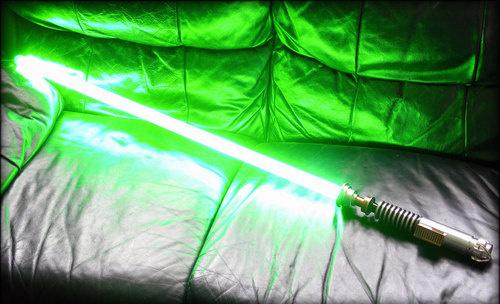
How to Make a Realistic Lightsaber at Home [Video]

The force is strong with this one

This Lightsaber is completely homemade by Jedi Master Bradley Lewis. It has all of the elements from the sounds, feel, and light to make it worthy for any Jedi in training.

Head on over to his website Slothfurnace to see further into the process it took to make this masterpiece. I seriously think it takes a bit of real Jedi power to create it. The force is strong with this one!

Watch him fire-up the bad boy:


Via Gizmodo

Cereal Boxes That Light-Up [Video]

Last year at CES 2011, I noticed these awesome cereal boxes that are infused with printable electronics that allows them to light-up. As the awesomeness started to settle in, I realized that out of many of the other technologies and gadgets featured at the show, these cereal boxes were my favorite. I absolutely refuse to buy any more cereal until these hit the store shelves!


Via Neowin

Thursday, January 06, 2011

CES 2011 Live Streaming Video Via Crunchgear

The Consumer Electronics Show (CES) 2011 has taken over Las Vegas! Can't make it? No problemo! CES 2011 is live streaming via Crunchgear. The video is below. Don't miss a thing!

Wednesday, January 05, 2011

Filtering Kitchen Wastewater For Plants

Water is a precious commodity, so finding ways to re-use waste water, especially in arid regions is essential to sustainability. Researchers in India have now carried out a study of various waste water filtration systems for kitchen waste water and found that even the most poorly performing can produce water clean enough for horticultural or agricultural use. They report details in the International Journal of Environmental Technology and Management.

Recycling domestic wastewater is becoming an important part of water management and emerging technology and a shift in attitude to waste in the developing world means that more people would be willing to re-use this so-called gray water given the choice. Unfortunately, affordable and effective domestic wastewater treatment is not yet available particularly in parts of the world where financial and technical constraints are acute. Nevertheless domestic wastewater from showers, kitchen sinks and laundry washing in homes and offices offers a potential resource that differs from industrial wastewater. Domestic waste water might contain an organic load from food processing, utensil washing in the kitchen, soap and detergents, with the main contaminants being proteins, carbohydrates, detergents, oil and grease and other dissolved and suspended compounds.

Subrata Dasgupta of the Council of Scientific and Industrial Research, in Kolkata, and colleagues have explored the potential of ceramic microfiltration membrane s used alone or in conjunction with different physicochemical treatments, such as biotreatment and adsorption, for cleaning up dirty dishwater. The team compared cross-flow microfiltration (CMF) with tubular ceramic membranes in single channel and multichannel configurations. Biotreatment involved using activated sludge or an adsorptive treatment based on the prepared dried roots of Eichhornia crassipes, an aquatic weed that grows well in polluted water.

The researchers found that, as one might expect, a 19-channel ceramic membrane performed better in terms of permeate quality than a single-channel filter. In terms of BOD (biological oxygen demand), COD (chemical oxygen demand), turbidity, TSS (total suspended solids), microfiltration of the waste water treated with adsorbent appeared to be most promising compared with other the approaches tested. In that approach, 98% removal of BOD and 99% removal of COD were seen. The quality of the treated water was found to be fit for use in horticulture and irrigation, the team concludes.

Source: Reprinted news release via Inderscience Publishers

Is The Hornet Our Key To Renewable Energy?

Tel Aviv University discovers that the outer shell of a hornet can harvest solar power

As every middle-school child knows, in the process of photosynthesis, plants take the sun's energy and convert it to electrical energy. Now a Tel Aviv University team has demonstrated how a member of the animal kingdom, the Oriental hornet, takes the sun's energy and converts it into electric power -- in the brown and yellow parts of its body -- as well.

"The interesting thing here is that a living biological creature does a thing like that," says physicist Prof. David Bergman of Tel Aviv University's School of Physics and Astronomy, who was part of the team that made discovery. "The hornet may have discovered things we do not yet know." In partnership with the late Prof. Jacob Ishay of the university's Sackler Faculty of Medicine, Prof. Bergman and his doctoral candidate Marian Plotkin engaged in a truly interdisciplinary research project to explain the biological processes that turn a hornet's abdomen into solar cells.

The research team made the discovery several years ago, and recently tried to mimic it. The results show that the hornet's body shell, or exoskeleton, is able to harvest solar energy. They were recently published in the German journal Naturwissenschaften.

Discovering a new system for renewable energy?


Previously, entomologists noted that Oriental wasps, unlike other wasps and bees, are active in the afternoon rather than the morning when the sun is just rising. They also noticed that the hornet digs more intensely as the sun's intensity increases.

Taking this information to the lab, the Tel Aviv University team studied weather conditions like temperature, humidity and solar radiation to determine if and how these factors also affected the hornet's behavior, but found that UVB radiation alone dictated the change.

In the course of their research, the Tel Aviv University team also found that the yellow and brown stripes on the hornet abdomen enable a photo-voltaic effect: the brown and yellow stripes on the hornet abdomen can absorb solar radiation, and the yellow pigment transforms that into electric power.

The team determined that the brown shell of the hornet was made from grooves that split light into diverging beams. The yellow stripe on the abdomen is made from pinhole depressions, and contains a pigment called xanthopterin. Together, the light diverging grooves, pinhole depressions and xanthopterin change light into electrical energy. The shell traps the light and the pigment does the conversion.

A biological heat pump

The researchers also found a number of energy processes unique to the insect. Like air conditioners and refrigerators, the hornet has a well-developed heat pump system in its body which keeps it cooler than the outside temperature while it forages in the sun. This is something that's not easy to do, says Prof. Bergman.

To see if the solar collecting prowess of the hornet could be duplicated, the team imitated the structure of the hornet's body but had poor results in achieving the same high efficiency rates of energy collection. In the future, they plan to refine the model to see if this "bio-mimicry" can give clues to novel renewable energy solutions.

The research team also discovered that hornets use finely honed acoustic signals to guide them so they can build their combs with extraordinary precision in total darkness. Bees can at least see what they are doing, explains Prof. Bergman, but hornets cannot -- it's totally dark inside a hornet nest.

Source: Reprinted news release via American Friends of Tel Aviv University